
Does steady business progress become difficult when customer expectations and market demands keep changing? Smart business leaders identify changing situations, prepare their companies for the future and make informed decisions.
Business expectations don’t remain constant. New challenges emerge with new technologies, shifts in customer preferences, and increased competition. Leaders focus on a few areas to bring sustainability.
Understand What the Business Needs Most
When customer demands change on a frequent basis, some businesses become agitated. Rather than panicking, it is necessary to meet customer requests, find new opportunities, and resolve operational concerns.
Strong leaders comprehend what is having a great impact on business performance. They allocate money, resources, and time properly.
What they do:
- Identify business challenges.
- Recognise areas that need improvement.
- Separate important decisions from temporary distractions.
- Understand customer requirements.
- Review current performance against business objectives.
Keep Customer Expectations at the Centre
Customer expectations keep evolving. Businesses that fail to identify changes are less likely to retain customers.
Smart leaders review customer feedback and determine what customers expect. They respond to genuine needs and common concerns.
How they enhance customer relationships:
- Listen carefully to customer feedback.
- Address recurring complaints.
- Maintain service standards.
- Make communication simple and transparent.
- Review whether existing offerings remain relevant.
Make Adaptability a Business Priority
Traditional methods no longer produce the desired results. So, adapting to new things and changes is a must. With adaptability, businesses adjust as needed and reconsider existing practices.
Leaders keep in mind which changes can lead to unnecessary disruption and which ones offer genuine value.
An adaptable business focuses on:
- Reviewing existing processes regularly.
- Being open to practical improvements.
- Evaluating new technologies before investing.
- Encouraging employees to share useful suggestions.
Financial and Operational Discipline
There can be pressure on resources due to changing expectations. Businesses can think anytime about investing in technology, introducing new services, and expansion. All this brings opportunities but also involves financial risks.
Before any initiative, smart leaders consider its costs, benefits, and long-term implications.
What measures do smart leaders take:
- Monitor cash flow and operating expenses.
- Review budgets before making major investments.
- Identify unnecessary costs.
- Maintain appropriate financial reserves.
Encourage Better Communication and Team Alignment
When business expectations change, employees need to understand what those changes mean for their responsibilities.
Without proper communication, different departments may work towards conflicting objectives. This can lead to delays, confusion, and avoidable mistakes.
Leaders should communicate decisions clearly and explain why certain priorities have changed.
Regular discussions also help management understand challenges that may not be visible at the senior level.
Effective communication involves:
- Sharing important updates with employees.
- Setting clear responsibilities and expectations.
- Encouraging employees to raise concerns.
- Keeping departments aligned with business objectives.
- Providing constructive feedback.
When everyone understands the organisation’s immediate priorities, teams can work with greater clarity and coordination.
Balance Short-Term Demands with Long-Term Goals
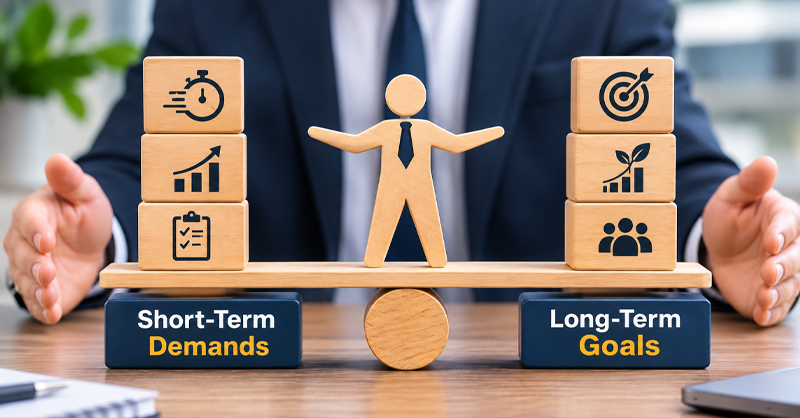
One of the biggest challenges for business leaders is managing immediate expectations without compromising plans.
A sudden decline in sales, an operational problem, or a new competitor may require quick attention. However, spending all available resources on short-term concerns can affect long-term development.
Leaders must learn to manage both.
Short-term priorities help maintain business continuity, while long-term planning provides a clear sense of direction.
A balanced approach includes:
- Addressing urgent operational issues promptly.
- Exploring opportunities for innovation.
- Reviewing long-term objectives periodically.
- Continuing investments in employee development.
- Maintaining realistic growth targets.
Make Informed Decisions
Not every market development requires a major business decision. Sometimes, reacting too quickly can create more problems than the original situation.
Leaders should evaluate available information, understand potential consequences, and consider different outcomes before taking action.
Data can help identify changing trends, operational weaknesses, and areas that require attention. However, numbers should be considered alongside practical experience and an understanding of the business.
Good decision-making requires:
- Collecting relevant information.
- Comparing available options.
- Considering potential risks.
- Consulting the right people.
- Reviewing results after implementation.
This approach encourages thoughtful decisions rather than unnecessary changes driven by temporary pressure.
Deepak Mandy, a leading entrepreneur, says that leaders should focus on a few imperative areas when customer expectations continue to change frequently.