
When money is tight, discipline sharpens. That’s the paradox.
During boom years, capital flows like an open tap. Founders pitch growth curves that climb like rockets. Investors chase momentum. Valuations stretch.
Then the correction hits.
The room changes, voices lower, and questions become sharper. The same pitch deck now faces the question: “Show me the numbers.” Have you noticed that in the post-pandemic period, more than double the number of startups came into existence? And now, over the last four years, many of them have shut down.
Every recession and financial crisis came with opportunities. Then, some of the startups with weak business models are sorted out. This phase reshapes the startup ecosystem. Today’s business environment reflects tight cash flows, more disciplined due diligence and a resting IPO. This is all focusing on profitability. However, reality is something different.
Market corrections have taken place. It does not mean they kill the start up ecosystems; rather, they reshape them. This evolving market needs adaptable startups agile in nature.
7 Structural Shifts Redefining the Startup Ecosystem After Market Corrections
Undoubtedly, the market is shifting into another phase, which is challenging to determine for startups. But when understanding all shifts, it is a bit easier to adapt to those changes and push your limits by breaking them to achieve results.
1. Capital Efficiency Replaces Growth-at-All-Costs
In bull markets, speed wins applause.
- High burn rates? Acceptable.
- Customer acquisition costs? A future problem.
- Profitability? Later.
After a correction, the tone shifts.
Founders open dashboards and stare longer at the cash runway. Finance meetings feel heavier. Every hire must justify itself. Every marketing campaign must convert.
Growth still matters. But sustainable unit economics matters more.
It’s like switching from sprinting uphill to running a marathon with limited water. You plan differently. You ration energy. You think ahead.
The startup ecosystem begins to reward endurance over hype.
2. Valuation Resets Restore Discipline
During funding booms, valuations balloon.
Cap tables get crowded. Investor protections weaken. Planning becomes optimistic by default.
A correction pulls numbers back to earth.
It hurts when looking at a founder who enjoys seeing a lower valuation. But discipline returns. Pricing reflects performance, not excitement.
Boards ask harder questions. Projections require evidence. Governance tightens. As often highlighted by Deepak Mandy, disciplined valuation frameworks build stronger companies than speculative waves ever could.
Short-term discomfort. Long-term structural health.
3. Funding Paths Are Expanding
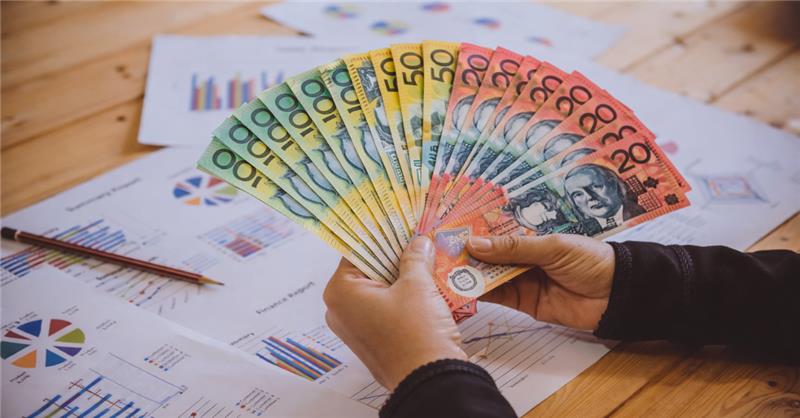
Venture capital is no longer the only door.
When equity becomes expensive, founders look elsewhere:
- Revenue-based financing.
- Strategic corporate alliances.
- Government innovation grants.
- Debt instruments.
- Crowdfunding platforms.
This shift reduces overdependence on one capital source. It also aligns funding with business models rather than vanity metrics.
The ecosystem matures. It diversifies. It becomes less fragile.
4. Due Diligence Gets Real
In overheated cycles, deals close quickly.
Now, investors dig deeper and adapt as per the startup ecosystems.
- They examine churn data.
- They review cohort retention.
- They ask about cybersecurity protocols and compliance readiness.
- They assess founder resilience under pressure.
The pitch meeting feels less like theatre and more like an audit.
For founders, preparation becomes non-negotiable. Clean financials. Scenario modelling. Clear risk disclosures.
Vision alone is no longer enough. Execution evidence speaks louder.
5. Sector Focus Is Shifting Towards Foundations
Speculative consumer trends cool first.
Capital flows towards infrastructure and resilience:
- Artificial intelligence infrastructure.
- Climate technology.
- Cybersecurity.
- Health technology.
- Supply chain systems.
- Regulated fintech tools.
Investors want problem-solvers, not trend chasers.
It’s the difference between building a house with decorative lights and reinforcing its foundation. In a storm, only one survives.
6. Talent Dynamics Are Rebalancing.
During booms, startups competed aggressively for talent. Salaries are inflated. Hiring sprees accelerated.
- Corrections slow the pace.
- Hiring becomes selective.
- Remote-first structures expand.
- Contract specialists replace large permanent teams.
Yet something powerful happens.
Engineers and operators laid off from large tech firms join early-stage ventures. Experience redistributes. Technical depth spreads across the ecosystem.
Constraint creates smarter teams.
7. Exit Timelines Are Extending
IPO windows narrow. Acquisition multiples are moderate.

Founders adjust expectations.
Instead of racing towards the exit, they focus on durable revenue milestones. Governance strengthens. Secondary liquidity options emerge for early stakeholders.
Patience replaces urgency.
And patience often builds better companies.
Frequently Asked Questions (FAQs)
Is it harder to raise venture capital in a downturn?
No. Because limitations encourage discipline and problem-focused invention, many prosperous businesses have historically been established during downturns.
How should founders prepare for funding in a correction cycle?
They should show market validation, enhance unit economics, lower the burn rate, and improve financial reporting.
Are valuations permanently lower after corrections?
Not necessarily. Valuations usually adjust as per the whole economic conditions, but can bounce back to their past condition after the market correction has been made.
Which sectors are strongest during corrections?
Whether it is a financial crisis or the market is in correction mode, innovative technological sectors such as AI, fintech, cybersecurity, and related fields are standing strong.
Long-Term Outlook
Market corrections act like winter in a forest. Weak branches fall. Strong roots deepen.
Short-term funding volumes may dip. Investor scrutiny may intensify. Valuations may compress. But transparency improves. Governance strengthens. Operational rigour becomes standard.
When macroeconomic stability returns, disciplined startups stand ready, leaner, sharper, and more resilient. So, how is the startup ecosystem changing after market corrections?
It is trading noise for fundamentals. Speed for substance. Hype for durability.
And here’s the irony.
When funding slows down, real innovation often speeds up, because only the builders who believe in the problem stay in the room. The tap may not be fully open anymore.
But are the ideas still flowing?
They’re stronger than ever.